

Moth Damage on Antique Rugs: When to Seek Oriental Rug Repair Near Me

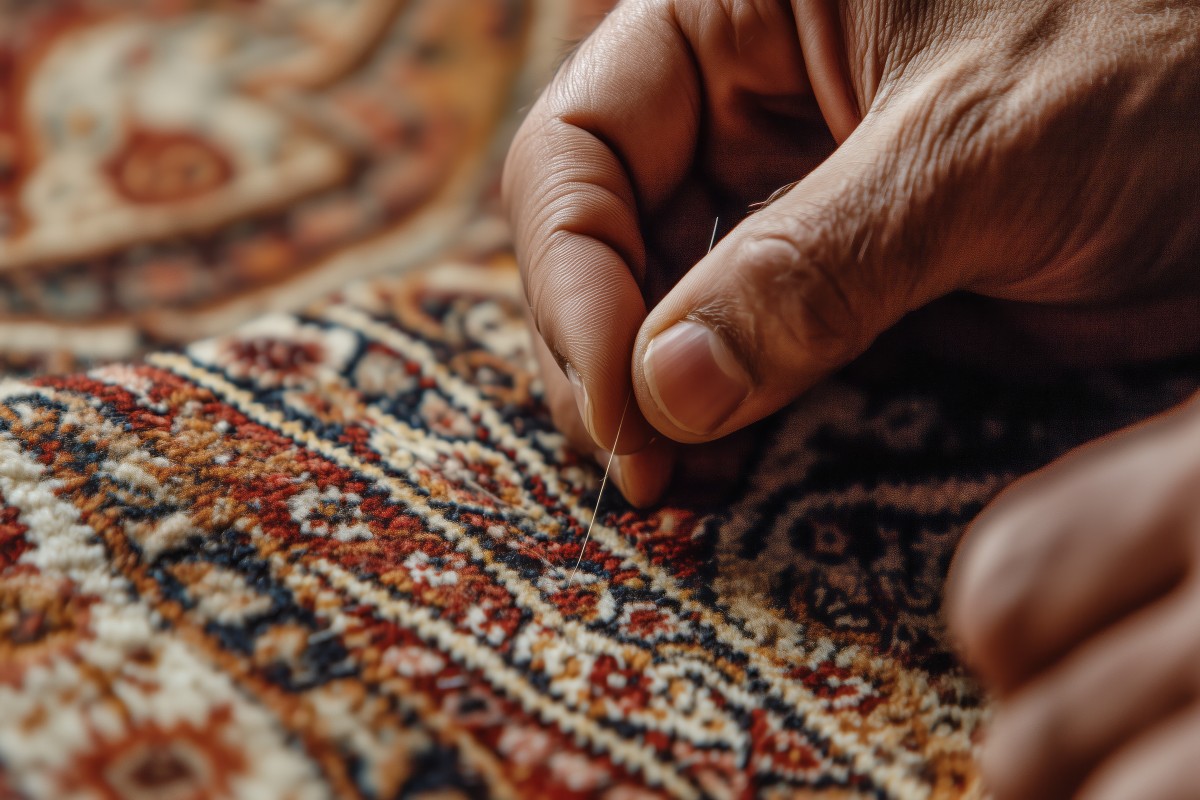
Searching for reliable oriental rug repair near me is often the first step a homeowner takes after discovering a bare, chewed patch beneath a sofa or dining table. Clothes moths do not attack rugs in plain sight; they thrive in quiet, dark spaces where vacuum cleaners rarely reach. When larvae feed on wool pile, they compromise the physical integrity of the foundation yarns, turning minor surface grazing into extensive structural damage in just a few weeks.
In this guide, we examine how to identify the subtle warning signs of an active moth infestation, evaluate structural damage, take immediate containment steps, and preserve your investment through professional re-weaving and washing.
Why Clothes Moths Target Antique Wool Rugs
To protect your textiles, it helps to understand what actually causes the destruction when homeowners begin searching for oriental rug repair near me. Flying adult moths are harmless to wool fibers; they do not possess mouthparts capable of chewing. The real culprits are the tiny, translucent larvae of the webbing clothes moth (Tineola bisselliella) and the case-bearing clothes moth (Tinea pellionella).
Larvae require keratin, a fibrous structural protein found in sheep’s wool, silk, goat hair, and camel hair, to survive and grow. Antique rugs are especially vulnerable because they often contain hand-spun wool rich in natural oils, along with organic deposits that accumulate over decades. Three key conditions accelerate moth colonization:
- Darkness and Lack of Disturbance: Underneath low-profile sideboards, heavy couches, and storage trunks.
- Stagnant Air and Warmth: Unventilated rooms or basements where humidity levels remain consistent.
- Microscopic Organic Residue: Pet dander, food crumbs, spilled liquids, and human skin cells that supply vital vitamins for developing larvae.
Early Physical Signs of Moth Activity
You do not have to wait until you see flying insects to realize your carpet is in danger. In fact, if you see moths fluttering around the ceiling lights, the infestation under your floor furnishings may already be advanced, making professional oriental rug repair near me an immediate necessity.
Webbing and Silken Tunnels
Webbing clothes moth larvae produce sticky silk as they feed. Look for thin, translucent sheets or tangled tubular pathways clinging to the surface of the wool. These webs trap dust and lint, giving the area a dingy, cobweb-like texture that does not lift easily with gentle brushing.
Sand-Like Granules (Frass)
Larvae leave behind tiny, hard pellets roughly the size of coarse salt grains. This waste material, known as frass, usually matches the color of the wool the insect has consumed. If you gently rub a damaged section and notice small colored granules falling out from between the warp and weft strings, larvae have actively digested those fibers.
Missing Pile and “Shaved” Patches
Unlike foot traffic wear, which happens gradually over years, moth grazing leaves distinct uneven voids. The wool looks cleanly cut away at the surface, exposing the stiff, light-colored cotton or wool foundation grids beneath.
| Indicator | Moth Infestation | Everyday Wear and Tear |
| Location | Dark zones, under furniture, along dark baseboards | High-traffic walking pathways, room centers |
| Fibers Affected | Protein fibers only (wool/silk); cotton base left behind | All fibers worn down evenly across the pattern |
| Residue | Silken tubes, sticky webs, colored frass grains | Loose fibers, dry sand, particulate soil |
| Damage Speed | Rapid loss over weeks or months | Gradual thinning over decades of use |
Assessing Foundation Damage: Pile Loss vs. Structural Rot
Before calling a local conservator for oriental rug repair near me, inspect how deep the larvae have penetrated. Hand-knotted rugs consist of vertical warp threads, horizontal weft threads, and hand-tied pile knots. Knowing which elements are affected helps determine the repair technique required.
Surface Pile Loss
When moths feed only on the soft wool pile, the structural foundation remains intact. The cotton or wool warps underneath are still firm. A skilled rug restorer can re-insert matched wool knots directly into the existing grid without rebuilding the foundation of the piece.
Foundation Breakdown
In older tribal pieces where the warp and weft are also spun from wool, larvae will consume both the pile and the foundation cords. When this occurs, the rug develops soft spots, loose tears, or distinct holes that unravel rapidly when moved. Restoring this level of damage requires building a new structural scaffold using matching cotton or wool threads before any re-knotting can begin.
Immediate Steps to Contain an Active Infestation
Taking quick protective action before scheduling oriental rug repair near me prevents larvae from migrating to neighboring carpets, wool drapery, or upholstered furniture.
- Isolate the Rug: Keep pets and foot traffic away from the room. Close interior doors to minimize air currents that disperse adult moths.
- Inspect the Reverse Side: Fold back each corner of the carpet and examine the white foundation strings on the back. Larvae frequently nest on the underside where light never penetrates.
- Vacuum Carefully: Use a vacuum wand without a motorized beater bar to extract loose larvae, cocoons, and frass from both sides of the rug. Immediately take the vacuum canister or bag outside your home, seal it in a plastic trash bag, and dispose of it in an outdoor bin.
- Avoid Retail Insecticide Sprays: Do not spray retail bug sprays or aerosol chemical treatments directly onto antique vegetable-dyed wool. These petroleum-based formulas can alter antique dye chemistry, cause colors to bleed, and leave oily films that attract sticky soil.
- Wrap in Breathable Material: If you must roll the rug while awaiting transport, use a clean cotton sheet or brown craft paper. Never seal an untreated, damp wool carpet inside airtight plastic bags for extended periods, as trapped moisture creates mildew and fiber rot.
At Rose Oriental Rugs in Berkeley, our preservation specialists safely neutralize moth activity through deep immersion washing and targeted temperature controls before any weaving begins.
The Professional Restoration Process
True restoration goes beyond patching a hole; it demands historical accuracy and textile knowledge. When an antique piece arrives for oriental rug repair near me, it follows a deliberate restoration protocol.
Submersion Wash and Sanitization
Every infested rug requires a full submersion bath in running water with neutral-pH soaps formulated specifically for natural wool. This removes embedded larvae, microscopic eggs, and acidic waste matter that cause long-term fiber decay.
Sourcing Period-Correct Wool and Dyes
Standard commercial wool looks glaringly obvious on an antique weave. Restorers hand-spin or select wool lots that match the exact micron thickness, crimp, and twist of the original rug. Yarns are custom-dyed using plant-based and mineral mordants to mirror the aged patina of the surrounding design.
Re-Warping and Re-Knotting
Using specialized tapestry needles, the weaver secures new foundation warps deep into the stable, undamaged portions of the rug. Knot by knot, they re-create the original design motif, whether it is an intricate Persian medallion or an abstract Caucasian geometric border. Once woven, the new pile is carefully sheared down to sit flush with the surrounding historic wool.
Best Practices for Preventing Future Moth Damage
Maintaining your rug prevents repeat visits for oriental rug repair near me. Simple seasonal adjustments make your home uninhabitable for wool-eating insects:
- Move Heavy Furniture Biannually: Shift sofas and credenzas three to four inches twice a year. This small adjustment exposes covered fibers to natural daylight and disrupts larval lifecycles.
- Vacuum the Dark Corners: When cleaning, use your vacuum hose attachment along perimeter baseboards, under radiators, and beneath low-hanging draperies.
- Rotate Every Twelve Months: Turning your rug 180 degrees balances everyday foot traffic and ensures no single section stays permanently buried in deep shade.
- Invest in Substantial Pads: Use dense, breathable needle-punched felt pads underneath your carpets. Quality pads elevate rugs slightly, allowing airflow while discouraging insect harborage.
Frequently Asked Questions
Can moth-eaten antique rugs really be restored?
Yes. Professional restorers can rebuild missing warp and weft foundations and re-tie individual wool knots to reconstruct original patterns. When completed using historically accurate fibers and natural dyes, the repaired area blends seamlessly with the surrounding vintage pile.
Will regular cedar blocks or mothballs eliminate an active infestation?
No. Cedar oils and naphthalene mothballs act only as mild deterrents against colonizing adults; they will not eliminate feeding larvae or destroy hardened moth eggs embedded deep inside the rug’s knot nodes. High concentrations of mothball gases can also leave pungent chemical odors that cling to wool for months.
How do I know if the moth damage is old or active?
Active damage typically features sticky, white cobwebbing, crawling cream-colored larvae, and fresh, sand-like frass matching the color of your rug pile. If the bare patch is completely clean, dry, and shows only raw foundation threads without webbing or residue, the infestation may have occurred in the past.
Does homeowners insurance cover moth damage repairs?
Most standard homeowners insurance policies exclude damage caused by insects, vermin, or gradual environmental rot. However, if your rug is covered under a separate fine-art floater policy, restoration costs may be partially reimbursable. Check with your insurance provider for specific textile coverage terms.
Can freezing a rug kill clothes moth larvae?
Freezing can kill larvae, but household freezers rarely reach the necessary sustained temperatures. The process requires commercial deep-freeze conditions of -4°F (-20°C) maintained continuously for at least 72 to 96 hours. An immersion wash performed by a textile conservator remains the most reliable method for household floor coverings.
Why do moths only eat certain colors on my rug?
Certain natural dyes use acidic plant mordants or metallic additives that render wool unpalatable to larvae. In contrast, other dyed wools, particularly light creams, tans, or un-mordanted yarns, contain sweet organic traces and lower chemical resistance, making them a preferred food source.
Protect Your Cherished Textiles with Rose Oriental Rugs
Discovering moth damage on a cherished heirloom can feel overwhelming, but immediate intervention stops fiber loss in its tracks. Before insects can permanently weaken your carpet’s foundation, take advantage of seasoned restorative care.
If you live in the San Francisco Bay Area, contact Rose Oriental Rugs in Berkeley to schedule a personalized evaluation. Our team provides careful, hand-woven repairs, specialized washing, and period-matched restorations to return your treasured textiles to daily service in your home.